
Building a personal brand in 2026 is no longer just for influencers or celebrities. Anyone with knowledge, skills, or ideas can build a strong online presence and turn it into income.
Whether you are a blogger, freelancer, entrepreneur, or content creator, your personal brand helps people recognize your expertise and trust your work.
The internet has shifted toward individuals rather than large companies. People prefer to follow real people who share useful insights, honest experiences, and valuable knowledge.
That is why personal branding has become one of the most powerful ways to build influence and create new income opportunities in 2026.
This guide walks you through exactly how to build your personal brand from scratch and, more importantly, how to turn it into a real source of income.
What Is a Personal Brand?
A personal brand is the way people perceive you, both online and offline. It reflects your expertise, values, personality, and the type of content you share with others.
Think of it as your reputation on the internet. When someone hears your name or comes across your content, they immediately associate you with a specific subject or skill set.
For example, I share blogging and SEO strategies on this website and on my personal website jumedeenkhan.com, where I share my experience, life journey, and lessons.
You can also do this by creating a website or, if you’re already running a blog or website, you can build your personal brand by sharing high-quality content, just as we do.
In exactly the same way, we publish useful and reliable content on this site mozedia.com, which establishes us as a trusted expert in the field of blogging.
In short, A personal brand is the public image and reputation you build around your skills, expertise, and personality, which helps people recognize, trust, and follow your work online.
Why This Is More Important Than Ever in 2026
The rapid growth of the creator economy has made personal branding more important than ever. Even on Google, content from big brands now ranks higher than random bloggers.
According to the Adobe Creator Economy Report, millions of people worldwide now earn income by building audiences around their expertise and personal brand.
A major reason for this is the growing popularity of AI tools and automated content.
Because AI can create a large amount of content in a very short time, audiences are increasingly prioritizing authentic, human-created content.
Research and industry insights shared by trusted platforms like Forbes suggest that creators who develop a unique and recognizable identity are able to grow faster and receive more opportunities.
People want to follow creators they trust.
They seek a unique personality, authentic experiences, and genuine advice. This shift has made personal branding one of the most powerful long-term digital assets.
For example, many bloggers are now finding ways to get traffic from AI chatbots as well as search engines, further expanding their reach and recognition.
Platforms like YouTube, X (formerly Twitter), LinkedIn, and newsletters allow people to build a large audience without relying on traditional media.
How to Build Your Personal Brand in 2026
Building a personal brand doesn’t require millions of followers. What matters most are clarity, consistency, and valuable content.
However, building a personal brand is not a one-week project. It is a long-term commitment, one of staying consistently active, adding value, and building trust with a specific audience.
The steps outlined below will help you lay that foundation in the correct sequence, ensuring that you don’t waste your time or get caught up in unnecessary busywork.
1. Define Your Niche
The biggest mistake people make when starting out is trying to please everyone and writing about every conceivable topic.
This approach results in content that appeals to no one. Therefore, the first step is to specialize.
- What do you know better than most people?
- What problems can you help solve?
- What subject could you talk about every day without getting bored?
If you aren’t sure where to begin, these proven methods for finding your niche can help you quickly narrow down your options.
Your niche should be based on a blend of your expertise, your passion, and market demand.
For example, instead of simply being a fitness coach, you could specialize in catering to busy professionals who want to stay fit without spending hours in the gym.
Being specialized is precisely what makes you memorable and worth seeking out.
2. Identify Your Target Audience
Once you have identified your specific niche, be absolutely clear about who you are speaking to.
The more precise a picture you can paint of your ideal audience member, the easier everything else will become.
For example:
- What challenges do they face?
- What do they aspire to achieve?
- What kind of content do they already consume?
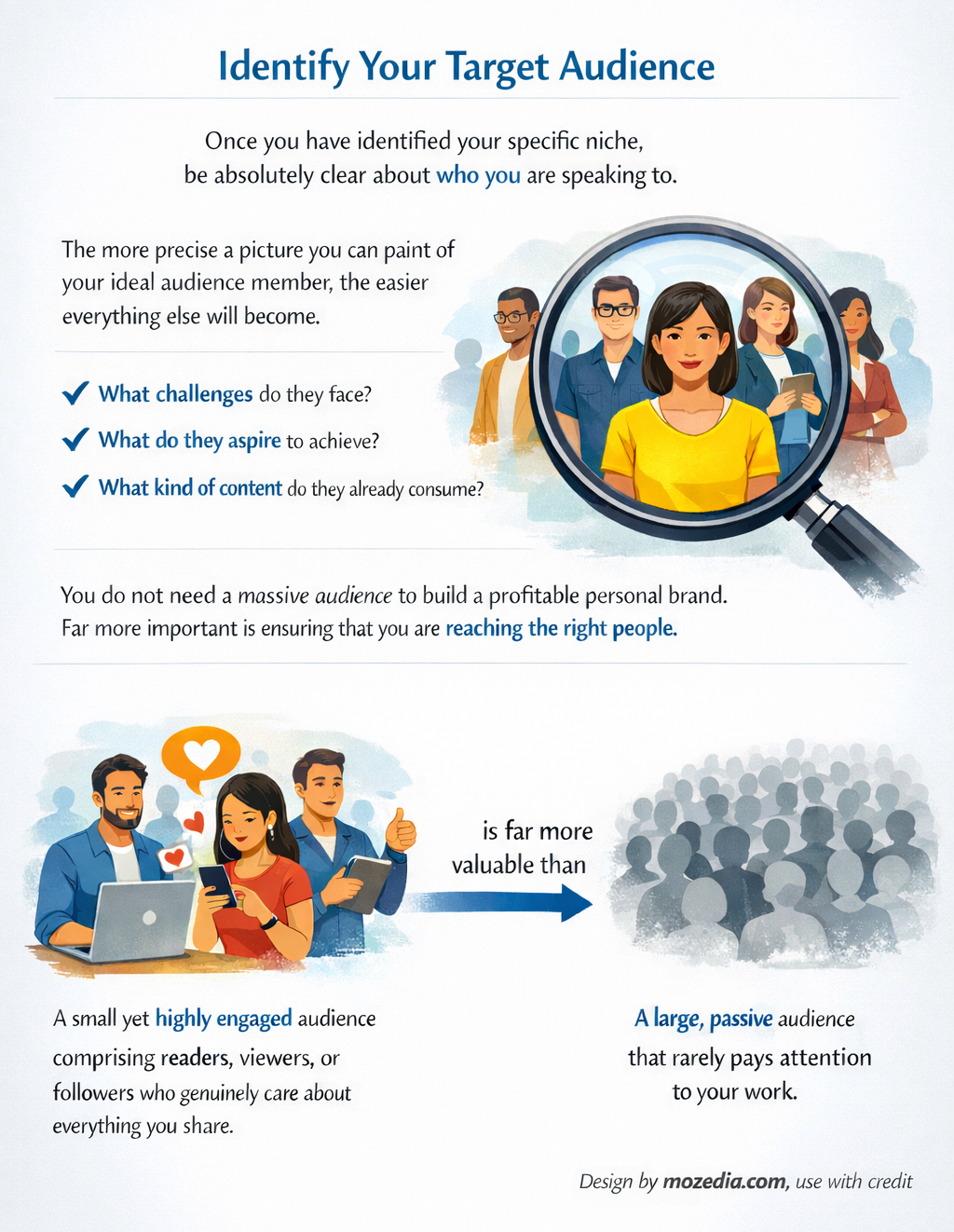
You do not need a massive audience to build a profitable personal brand. Far more important is ensuring that you are reaching the right people.
A small yet highly engaged audience comprising readers, viewers, or followers who genuinely care about everything you share is far more valuable than a large but passive audience that rarely pays attention to your work.
3. Choose a Perfect Platform
Many people make the mistake of spreading themselves too thin by attempting to establish a presence on multiple platforms simultaneously.
A better approach is to select a single platform where your target audience is already present, and to fully master it before venturing onto other platforms.
Determine which one it is:
- Is it Instagram?
- Is it YouTube?
- Is it TikTok?
- Is it Facebook?
- X (formerly Twitter)?
- Or perhaps another platform entirely?
Focus all your initial energy on that one specific place. Maintaining consistency on a single platform is always more effective than making sporadic efforts across several different ones.
For instance, if your audience responds well to short-form written content, you might explore how to monetize X, or alternatively, delve deeper into long-form blogging.
At least, choose a platform that aligns best with your strengths.
4. Build a Unique Identity
Your visual identity and your voice matter far more than most people realize. When someone visits your profile, they should immediately understand:
- Who you are,
- What you stand for,
- And why they should stick around.
Maintain a consistent visual aesthetic, craft a clear headline or bio, and adopt a style that reflects your authentic personality.
Don’t be generic or cliché. Generic content gets lost in the crowd.
Your opinions, your stories, and your unique way of explaining things, these are the elements that set you apart from the thousands of others discussing the very same topics.
Emphasize what makes you YOU. This is the one thing no one else can replicate, and it is precisely what builds a powerful personal brand.
5. Create Useful Content
Your content is the primary means by which you showcase your expertise and capture people’s attention over time.
The goal is not to produce the most content, but rather to create content that is genuinely useful and engaging for your target audience.
- Teach them something new,
- Help them solve a real-world problem,
- Or share a perspective they have never encountered before.
If you are looking for practical tips to make your writing more impactful, this guide on how to write engaging articles is well worth a read.
In 2026, an often-underrated approach is to document your journey rather than waiting until you have become an expert.
Share with your audience what you are learning in your own life, the mistakes you are making, and the results you are achieving.
This is because audiences today value transparency, and it builds trust far more rapidly than any sophisticated strategy ever could.
6. Build Authority and Trust
Authority and turst is not something you declare yourself; it is something that others bestow upon you over time.
Over the years, I have shared many practical blogging strategies on Mozedia, which helps readers learn from real-world experience rather than theory.
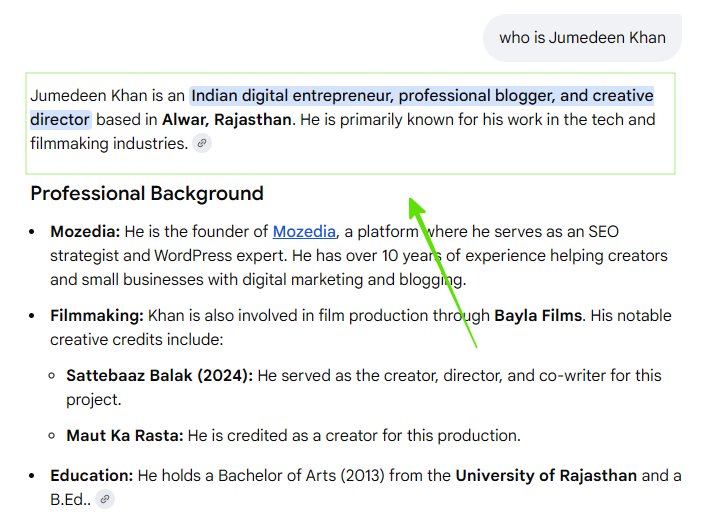
You build it by remaining consistently active, by being honest about what you know and what you don’t, and by backing your ideas with real-world experience or well-researched information.
Guest posting, speaking on podcasts, collaborating with other creators in your field, and getting featured on prominent websites, all of these activities accelerate this process.
One technical aspect of authority that is crucial to understand is your website’s ‘Domain Authority’; this influences how well your content ranks in search results.
If you wish to learn how to strengthen your authority and trust, this article titled How to Increase Domain Authority explains the concept clearly.
7. Grow Your Audience and Community
Growth stems from two things:
- Creating shareable content
- And actively engaging with people.
Many creators make the mistake of merely broadcasting content without ever interacting with their audience.
Building a genuine community works differently. To do so:
- Respond to comments.
- Ask your audience questions.
- Initiate conversations with your followers.
- Give recognition to those who support your work.
Instead of simply broadcasting content, build relationships by engaging with others. Comment on posts by people in your field. Collaborate with other creators.
Show a genuine interest in the people who follow you.
An audience that feels seen and appreciated is far more loyal and significantly more likely to make a purchase from you when the time is right.
Additionally, consider utilizing AI tools to assist with brainstorming content ideas, repurposing existing posts, or researching trending topics within your niche.
When used correctly, AI tools can save you several hours each week without making your content sound robotic.
If you want to see real examples of personal branding, blogging strategies, and online business experiments, you can see my personal website JumedeenKhan.com.
How to Monetize Your Personal Brand in 2026
Once your personal brand begins to attract a loyal audience, you can start generating income from it. There are numerous opportunities available to monetize your brand.
The most important thing is to select strategies that align with your specific niche, the size of your audience, and the value you provide.
Here are the most effective methods currently available.
1. Niche Brand Partnerships
You don’t need millions of followers to land brand deals. In fact, brands across many industries now prefer working with smaller creators over large accounts.
This is especially true for creators who despite having a smaller follower count are deeply engaged with their content and possess a loyal audience.
A creator with 20,000 dedicated fans who trust their recommendations is far more valuable to a supplement brand than a lifestyle influencer with 200,000 followers who rarely pay attention to their posts.
Reach out to brands that are a perfect fit for your content and audience. Be explicit about:
- Who your audience is,
- What their needs are,
- And how your content can help the brand reach them.
Authenticity matters here, too. If you start promoting products you don’t genuinely believe in, your audience will catch on very quickly.
Therefore, only promote brand products or services that you have personally tested and in which you have complete confidence.
2. High-Ticket Services
The most direct way to monetize your expertise is by offering consulting, coaching, or specialized services.
If you have established credibility within your specific field, people will be willing to pay a premium for your direct assistance.
A marketing consultant, career coach, UX designer, or financial advisor with a strong personal brand can command significantly higher fees than someone without one.
High-ticket services work exceptionally well in the early stages, as they do not require you to have a massive audience.
You simply need a few clients who are the right fit for you.
Initially, offer your services to people within your existing network, and then let testimonials and referrals do the rest.
3. Affiliate Marketing
Affiliate marketing is one of the easiest ways to generate income through a personal brand; I have earned thousands of dollars using it myself.
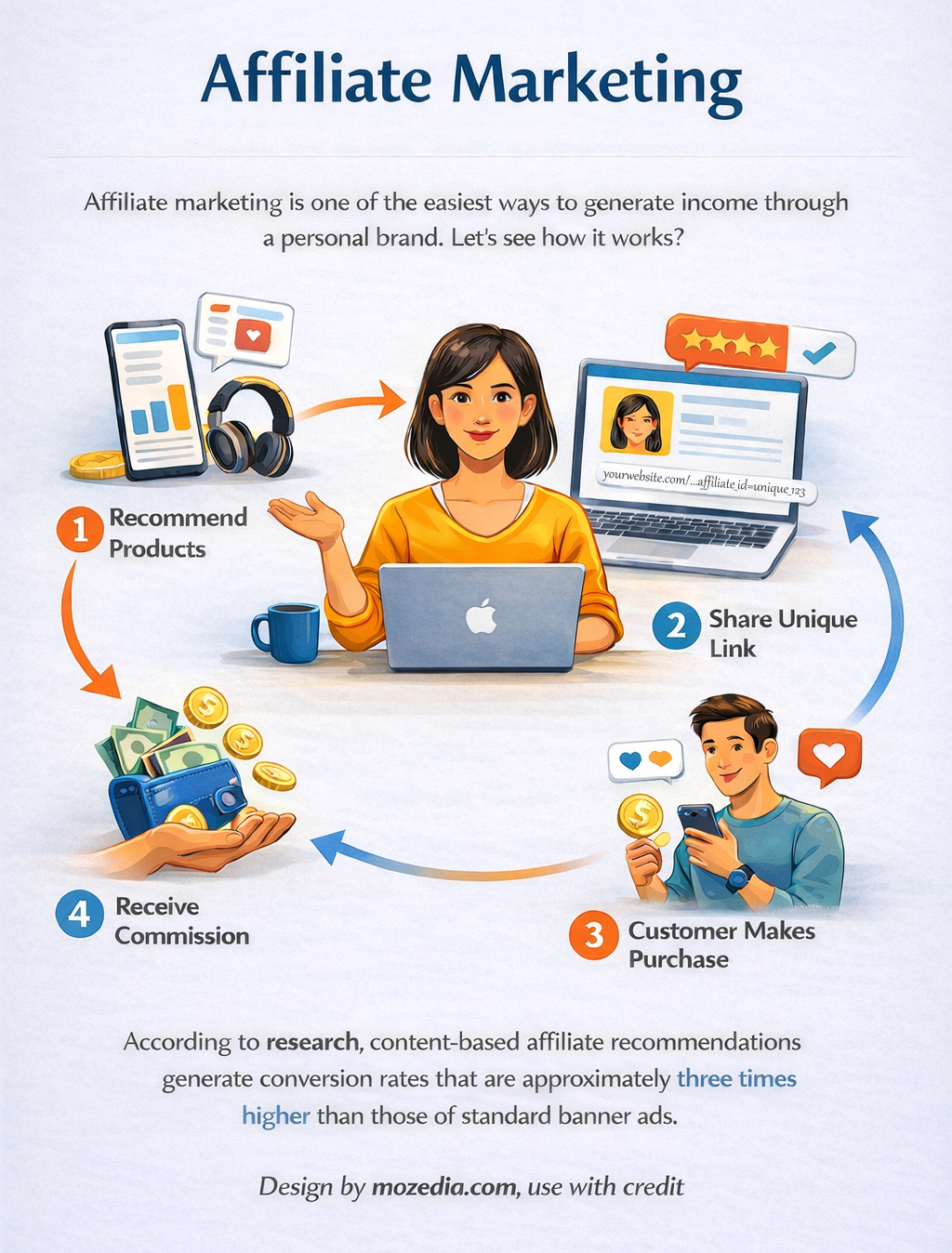
You can recommend products or tools that you genuinely use, and whenever someone makes a purchase through your unique link, you earn a commission.
The most crucial aspect of this is — relevance.
Recommending products that are truly useful to your audience builds trust, whereas irrelevant promotions erode it.
For instance, if your audience consists of bloggers, writers, or content creators, you can recommend the specific tools and resources that you utilize yourself.
You can find more detailed information on this topic in this article:
The most effective affiliate strategies are built upon honest reviews, tutorials, and comparisons that empower your audience to make informed decisions, rather than relying merely on generic advertisements.
According to my research, content-based affiliate recommendations generate conversion rates that are approximately three times higher than those of standard banner ads.
4. Digital Products and Content
Digital products represent one of the most scalable methods of income for personal brand builders unlike services, which require exchanging time for money.
A digital product can be sold repeatedly with very minimal ongoing effort. The most popular formats include online courses, e-books, paid newsletters, templates, and toolkits.
The best digital products solve a very specific problem for a very specific audience.
Any generic guide on productivity, for instance, will be difficult to sell.
Conversely, a specialized course, such as one teaching a new manager how to handle difficult conversations during their first 90 days, will find its audience much more easily.
Specificity is the key differentiator between a product that people simply scroll past, and one they feel compelled to purchase.
5. Direct-to-Audience Sales
Social media and community platforms have made it easier than ever to sell goods directly to your followers, without the need for any intermediaries.
Platforms such as Instagram and Facebook Shops, Gumroad, Patreon, and community platforms like Discord all provide creators with direct access to their most engaged supporters.
If you are building a presence on Facebook and wish to explore the monetization options available there, this guide on How to Make Money on Facebook offers a comprehensive overview of the current landscape.
The key advantage of selling directly to your audience is the relationship.
When someone purchases goods directly from you, they are buying from a person they trust, rather than from an anonymous brand.
This trust translates into higher conversion rates, improved customer retention, and more actionable feedback, all of which help you refine and enhance your products over time.
Conclusion
Building a personal brand in 2026 isn’t just about becoming famous. It is about being recognized, trusted, and valuable to a specific group of people.
It begins with choosing a clear niche, remaining consistently active, and creating content that genuinely helps your audience.
Subsequently, monetization happens naturally, as you will have earned the kind of trust that makes people willing to pay for what you offer.
In the years to come, the creators and professionals who succeed will be those who view their personal brand as a long-term investment.
While building it takes time, the compound effect is truly real.
Every piece of content you publish, every relationship you build, and every person you help all combine to create something whose value appreciates over time.
If you are ready to take the first step and the best time to start is today then begin right now.
- First, learn how to start a blog (right way for 2026)
- Or, discover how to become a successful YouTuber.
This depends on which platform is the best fit for you. Choose your niche, select your platform, and start creating content.
Your future audience is already out there, waiting for you.




Leave A Comment