
Free Headline Analyzer Tool – Write Titles That Get More Clicks & Rankings
Headlines are the first thing users and search engines see, and even small improvements can significantly boost your click-through rate (CTR), engagement, and revenue.
Our free headline analyzer tool helps you create powerful, SEO-optimized headlines that attract more clicks, drive more traffic, and improve search rankings.
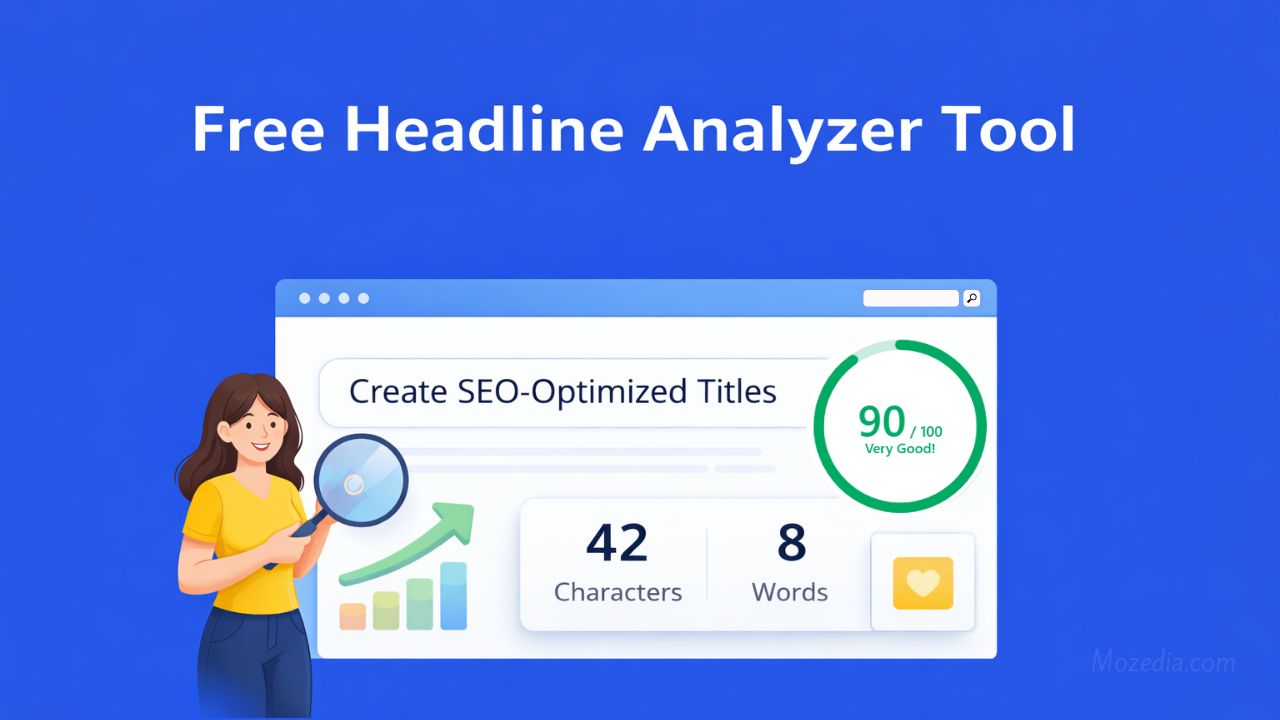
This tool instantly analyzes your headline and gives you a clear score, along with actionable insights to make it stronger, more emotional, and search-engine friendly.
If the title doesn’t immediately grab attention, it gets ignored, no matter how good the content is. That’s why we need to write titles that appeal to both users and Google.
This tool analyzes the headline you enter in the same way that Google and real users see it, not the way we think it should perform well.
If you’re also working on increasing overall website traffic, you may want to explore our guide on getting more traffic from Google Top Stories.
How Does This Headline Analyzer Tool Work?
This title analyzer tool is very easy to use. Simply enter your headline and click on the “Analyze” button, the results will appear in just a few seconds.
This tool considers several important factors that influence clicks and rankings, such as word balance, sentiment, length, and headline type, and displays an overall score.
With the overall score, you’ll know exactly what’s lacking in your post title and how to improve it for better performance on Google search and social media platforms.
Key Features of Our Headline Analyzer Tool:
Our headline analyzer tool is designed to evaluate every crucial element that makes a headline successful in search results and user engagement.
It doesn’t just give you a score; it also clearly explains why your headline is performing the way it is and what you can do to improve it.
This headline analyzer displays results based on the following factors:
1. Overall Headline Score
This score shows the overall strength of your headline on a scale of 0 to 100. It quickly tells you how well your headline is optimized for SEO, clarity, and user engagement.
2. Word Balance Analysis
This feature analyzes the balance of words in your headline, including common, uncommon, emotional, and power words, to make it more engaging and impactful.
3. Character and Word Count
The character and word count analysis ensures your headline is neither too short nor too long to fit within search results and includes important keywords.
4. Sentiment Analysis
Sentiment analysis identifies whether your headline expresses a positive, negative, or neutral sentiment. Headlines with strong emotional intent typically perform better.
5. Headline Type Analysis
This feature identifies the type of headline you’re using, such as how-to, listicle, guide, or informational. This helps tailor the title to user preferences.
6. First and Last Word Review
This feature helps you evaluate the beginning and end of your headline to ensure they are clear, strong, and compelling enough to encourage users to click.
7. Google Search Preview
The Google search preview shows you how your headline will appear in actual search results. This helps you ensure your title is clear, readable, and engaging on Google.
8. Summary (a Quick Overview)
The summary section provides a quick overview of headline performance, highlighting strengths, weaknesses, and areas for improvement to boost SEO, engagement, and visibility.
This is how this headline analyzer tool helps you write better titles.
Haven’t you understood yet? Still want a deeper understanding?
Below, we explain each factor in detail to help you optimize your headlines effectively.
What does the Overall Score Actually Mean?
The overall score shown in the analysis results is not a random number. It quickly and reliably tells you how well your headline will perform in search results and with real users.
This score indicates how well your headline:
- Stands out in search results
- Clearly communicates value and encourages clicks
- Is optimized for SEO without being over- or under-optimized
A good score doesn’t guarantee a perfect headline, but it does indicate that you’re on the right track and avoiding common headline mistakes that limit clicks and rankings.
How Word Balance Affects Headline Performance
Every word in your headline serves a specific purpose, which is why this tool categorizes your headline into different word types.
- Common words make the headline sound natural and easy to read.
- Uncommon words pique curiosity and stand out.
- Emotional words evoke interest and elicit a reader response.
- Power words add strength, clarity, and confidence.
Most headlines fail because they are either too simple to grab attention or too complex to be easily understood for users and search engines.
The Word Balance section clearly shows where your headline is lacking, helping you adjust the right words to improve clarity, engagement, and click potential.
Character Count and Word Count: The Practical Reality
This section focuses on how headlines perform not just in theory, but in real-world search results and how actual users perceive them.
Google often truncates longer titles, and users rarely read headlines that are unclear or overly cluttered.
That’s why this tool provides clear signals about:
- Whether your headline is too short to be effective
- Whether essential keywords are missing
- Whether your headline is likely to be truncated in search results
By keeping both character and word counts in check, you can stay within recommended limits while creating clear, compelling, and search-friendly headlines.
Google’s own documentation explains how titles are displayed in search results, which you can read on Google Search Central.
Understanding Headline Sentiment
Several studies, including research on “Title Tags Formulas” shared by Backlinko, show that emotional headlines tend to receive higher engagement, and clicks.
The Mozedia headline analyzer tool’s sentiment analysis feature reveals the overall emotional tone of your headline and how it might affect readers.
While neutral headlines often seem safe, performance data shows that headlines with clear emotion or intrigue tend to attract more attention and generate greater engagement.
This tool doesn’t push you toward a specific tone; rather, it helps you understand whether your headline is emotionally compelling enough to stand out and connect with users.
Why Headline Type Matters
This headline analyzer tool’s headline type section shows which format your headline follows, such as a how-to or list-based title.
Performance data shows that these formats are easier for users to understand at a glance and generally receive more engagement than vague or unclear headlines.
Choosing the right headline format is part of a larger content strategy, which we’ve explained in detail in our guide on finding the right blogging niche.
The First and Last Words: The Success or Failure Factor
Most of your readers will only scan or read the first and last few words of a headline before deciding whether or not to click.
If the beginning is weak or the ending falls flat, the headline is often ignored, no matter how well-written the middle section may be.
This section emphasizes the words that readers are most likely to see first, helping you strengthen the parts that matter most.
Google Search Preview: No More Guesswork
Google Search Preview shows you exactly how your headline will appear in Google’s actual search results, eliminating the need for guesswork.
This is the crucial moment when users decide whether to click on your result or scroll past it and choose someone else’s title.
Seeing this preview before publishing helps you identify cut-off text, awkward phrasing, or unclear titles, allowing you to make final adjustments before potentially losing clicks.
If you’re serious about on-page SEO, understanding how Google displays results is essential. Our People Also Ask SEO guide explains this behavior in more detail.
Final Thoughts
This free headline analyzer tool doesn’t write headlines for you. Instead, it simply provides quick, data-driven feedback, just like an expert would.
If you publish content regularly, checking your headlines here before each article can become a smart and repeatable habit, allowing you to write better titles for your blog posts.
You can also explore more free utilities like this in our SEO tools section.
Remember that, small changes to your headlines might seem insignificant, but over time, they can lead to noticeable improvements in traffic, click-through rates, and search rankings.
So don’t ignore them, and try this tool and write SEO-optimized titles.
