
Are you wondering how to rank in Google’s People Also Ask (PAA) boxes? You’re not alone. Many bloggers and website owners want to achive this.
PAA boxes are now one of the most clicked SERP features, stealing traffic from traditional organic results. And if you’re not optimizing for them, you’re leaving clicks on the table.
In this guide, I will show you how to rank in People Also Ask boxes, a method I’ve used on hundreds of my blog posts using tools like Semrush, Ahrefs, and GSC.
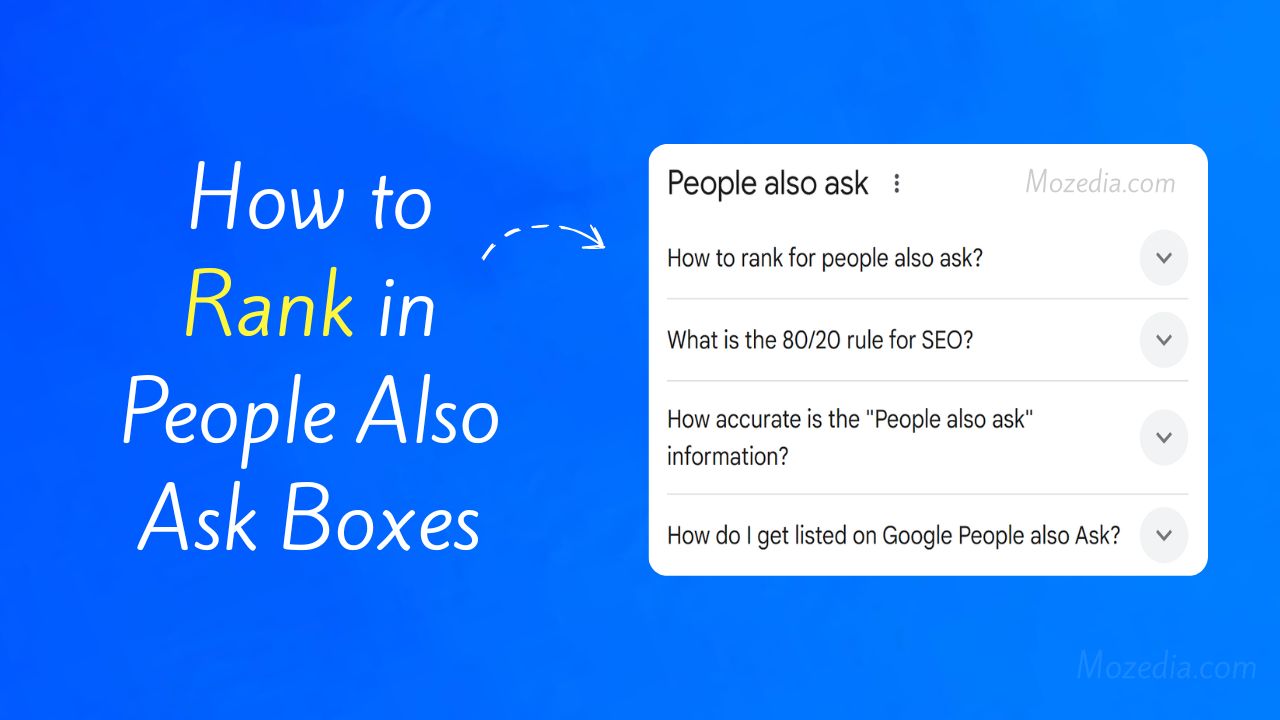
Ranking in Google’s People Also Ask (PAA) boxes is one of the smartest ways to gain visibility, drive clicks, and showcase authority in search results, especially in 2026.
With Google’s evolving AI-powered SERPs, owning a PAA spot means you’re answering searchers’ real questions better than your competitors.
If you’re looking to boost your organic traffic, improve your authority, and dominate SERPs, then you can’t ignore the People Also Ask (PAA) box in Google search results.
What Are People Also Ask Boxes?
The People Also Ask (PAA) box is an interactive feature that appears in Google search results, displaying a list of questions related to a user’s query.
Clicking on these questions instantly reveals a short summary answer, along with a link to the source page containing that information.
The PAA box helps users understand a topic in more depth and increases visibility for content creators.
Its unique feature is that as users click on questions, new related questions automatically appear, creating a continuous chain of information.
Example:
Search: How to Rank In People Also Ask Boxes?
People also ask (PAA) Box:
- How to rank for people also ask?
- How do rank google people also ask?
- What is people also ask?
- How to rank in People also Ask?
- How do I get listed on Google People also Ask?
These boxes grow as users click on them more, making them a never-ending source of traffic, if you can manage to get a spot in them.
Why Ranking in PAA Matters?
According to the Semrush Sensor, PAA boxes appear in over 65% of all search queries, and according to Ahrefs, PAA (People Also Ask) boxes appear in 43% of search queries.
And here’s why they are matter:
- Higher CTR: PAA boxes show up high on page 1, often above the fold.
- Voice Search Friendly: Google often pulls voice answers from PAA results.
- Position Zero Shortcut: You don’t need to rank #1 to appear in PAA, you can rank on page 2 and still grab that spot.
- Topical Authority Boost: Being featured increases your trustworthiness and semantic coverage.
Now let’s talk about how to rank in people also ask boes in detail.
How to Rank In People Also Ask Boxes (PPA Expert Tips 2026)
The easiest way to rank in Google’s People Also Ask box is to create content that directly and clearly answers people’s questions.
First, find common questions related to your topic. Do keyword research to understand what people are searching for.
Then, write short but informative answers to those questions. Make sure the content is easy enough for anyone to quickly read and understand.
In my experience, the content should always be scannable, meaning use short paragraphs, bullet points, and clear headings. Let’s explain in detail.
1. Identify PAA Questions in Your Niche
The first step to ranking in Google’s People Also Ask box is understanding what questions people are actually asking.
That means you need to find the questions that are already being searched.
You can use these tools for this:
- AlsoAsked.com
- AnswerThePublic
- Semrush or Ahrefs
- Google Search itself
The easiest way is to search your main keyword on Google. Then open a couple of questions in the PAA box that appears below.
As you click, new questions will automatically appear. Note down the questions that are most relevant to your blog topic.
This will give you a clear understanding of what doubts people have about the topic you’re writing about and what kind of answers they are looking for.
For example:
If your topic is “SEO for beginners,” you might find questions like these in the PAA box:
- What is SEO in simple terms?
- How do I start SEO from scratch?
- Is SEO free or paid?
These questions show what the audience needs and which points you should definitely cover in your article.
2. Answer Questions Using the Q&A Format
To appear in the People Also Ask (PAA) section, you should structure your content in a question-and-answer format.
This means taking the questions you’ve identified and using them directly as subheadings, followed by a short, concise answer.
The best approach is:
- Make the question a heading (H4 or H5).
- Provide the answer clearly in the first line.
- Google prefers this structured format for answers.
Example:
H4: What is SEO in simple terms?
SEO stands for Search Engine Optimization. It’s a process of improving a website so that it ranks higher in Google search results and attracts more visitors.
Always remember, your answer should be short, simple, and to the point.
An answer of 40 to 60 words is generally considered ideal, as Google often uses text of this length for PAA snippets.
3. Use Structured Data (FAQ Schema)
Adding FAQ schema to your content is highly beneficial for increasing the chances of appearing in Google’s People Also Ask (PAA) boxes.
Schema is a type of code that helps Google understand which questions and answers are present in your post, while Google may not always display the FAQ schema, but it still helps search engine bots better understand the structure of your content.
And this further increases your chances of appearing in the PAA section. Such questions can typically be included in an FAQ section:
- how to rank in people also ask boxes?
- how to optimize for people also ask
And all similar short, common questions that people frequently ask.
Here’s an example of FAQ Schema markup (JSON-LD format):
<script type="application/ld+json">
{
  "@context": "https://schema.org",
  "@type": "FAQPage",
  "mainEntity": [
    {
      "@type": "Question",
      "name": "How to Rank in People Also Ask Boxes?",
      "acceptedAnswer": {
        "@type": "Answer",
        "text": "To get featured in Google's People Also Ask (PAA) section, find relevant questions, and provide direct answers in 40-60 words, creating trustworthy content that addresses both user intent and long-tail keywords."
      }
    },
    {
      "@type": "Question",
      "name": "How to Optimize for People Also Ask (PAA) Boxes?",
      "acceptedAnswer": {
        "@type": "Answer",
        "text": "To appear in Google's People Also Ask (PAA) section, write question as headings, provide short, direct answers in an FAQ-like format, add FAQ schema markup, and keep the content clear and regularly updated.."
      }
    }
  ]
}
</script>
If you’re on WordPress, tools like Rank Math or Yoast SEO Premium make this super easy. Learn more on schema.org FAQPage.
Here is the complete guide of Yoast plugin setup.
4. Target Long-Tail & Intent-Based Keywords
Most of the questions that appear in People Also Ask (PAA) are not simple, but rather long and detailed questions.
We call these long-tail or intent-based keywords, meaning questions that clearly reveal the user’s intent.
For example:
- Make Money Online
- How to Make Money Online
- Best Ways to Make Money Online
- How to Make Money Online from Home
These are not short keywords, but complete questions.
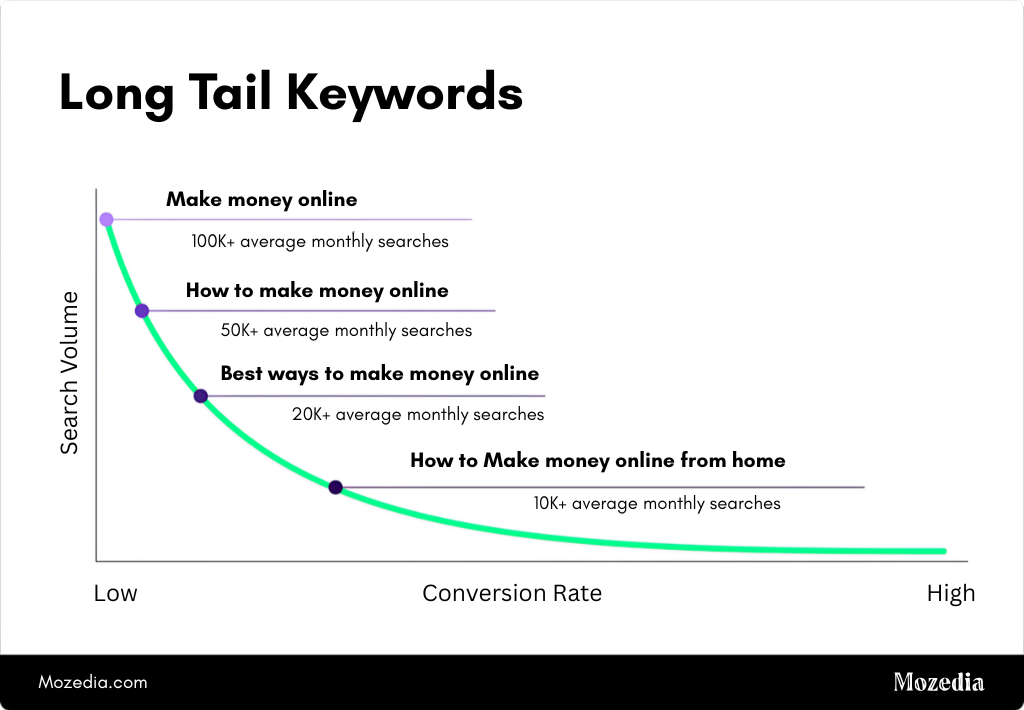
Google is more interested in displaying answers to such questions because they clearly show the user’s needs.
Therefore, include these questions in your content, and ideally, use them as subheadings and provide clear answers below them.
This makes Google believe that your post is providing solutions to real problems, increasing your chances of appearing in the PAA section.
5. Add Your Personal Experience
Google’s People Also Ask (PAA) box tends to display content that demonstrates real-world experience, not just generic information.
This means you should show in your articles that you have firsthand experience with the topic.
You can include things like:
- Screenshots
- Your own results
- Tests you’ve conducted and their data
- Step-by-step instructions
When you do this, Google understands that the content isn’t just copied from books or the internet, but is based on genuine experience.
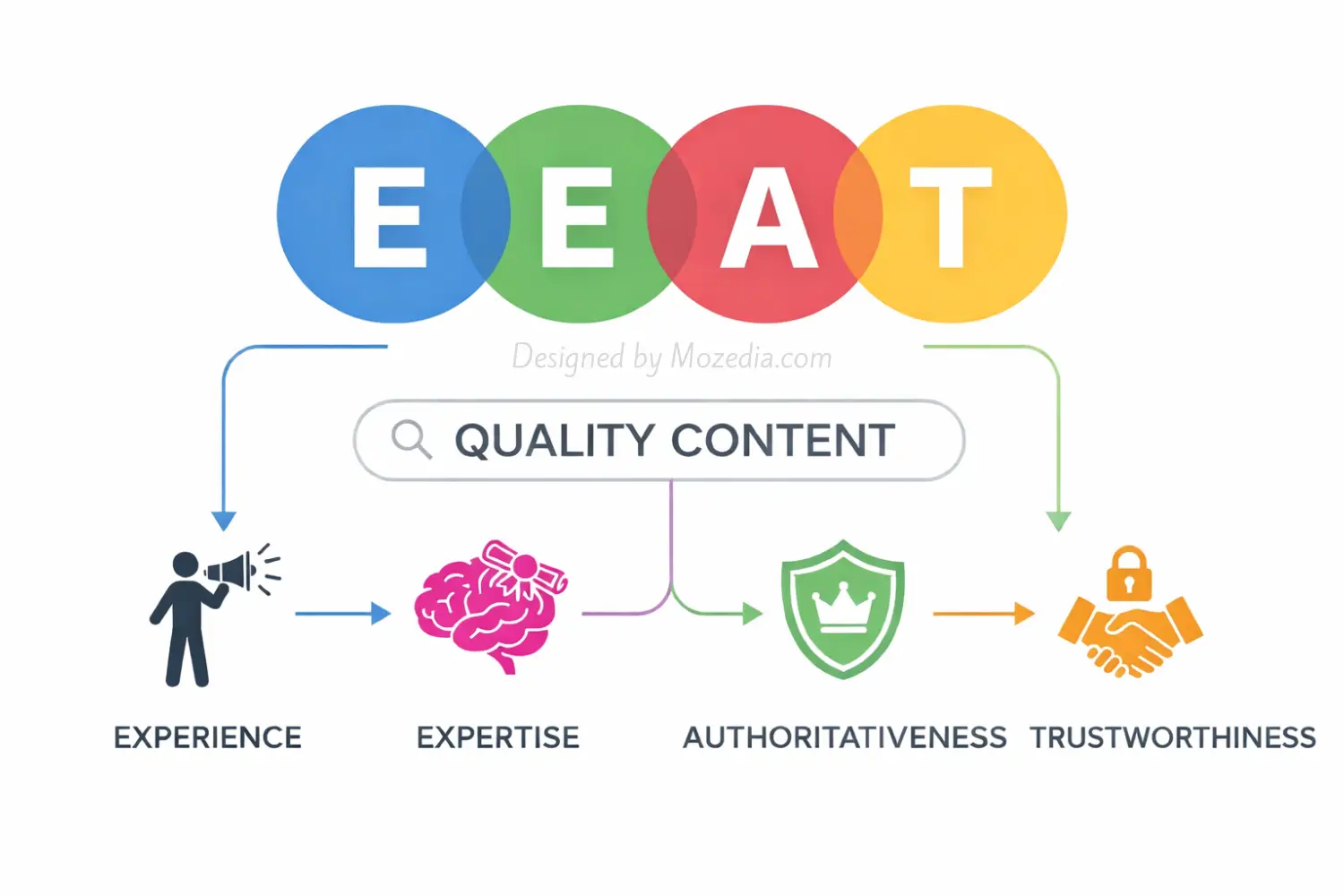
This experience strengthens your E-E-A-T (Experience, Expertise, Authoritativeness, Trust) and makes your answers more likely to be featured in the PAA section.
If you want to increase your website’s domain authority, check out this guide, How to Increase Domain Authority with 7 Proven Strategies.
6. Write Better Answers Than the Competitors
One very simple and often overlooked way to get into the People Also Ask (PAA) section is to provide better answers than your competitors.
First, search on Google for the same questions you want to rank for, and carefully read the answers that are already appearing in the PAA section.
- Now ask yourself a few questions:
- Can I provide a clearer and more understandable answer?
- Is this information outdated?
- Does it lack examples, statistics, or images?
If the answer is yes, then you should write a better, clearer, and more helpful answer to that same question on your blog.
Over time, Google replaces weaker answers with better, fresher, and clearer ones in the PAA section.
Therefore, even writing just slightly better than your competitors can make a big difference. With PAA you can rank without backlinks.
7. Keep Updating Your Content
The People Also Ask box is constantly changing. A question that appears today might disappear a few months later or be replaced by a new one.
Therefore, it’s essential to revisit your posts periodically and keep improving them.
- Check these things every few months:
- Add new trending questions
- Correct outdated or inaccurate answers
- Include new data, fresh experiences, or learnings
- Monitor your rankings using tools like Semrush or Google Search Console
When your content is fresh, useful, and up-to-date, Google understands that the page is still relevant.
This increases the likelihood of your content appearing in the People also ask (PAA) boxes section.
How does Google Select Content for PAA Box?
Now the question is, how does Google decide which website’s answer to display in the PAA (People Also Ask) section?
Google uses AI, natural language understanding models, and its Helpful Content system for this.
With their help, it selects answers from the internet that best address the user’s question.
In 2026, Google is placing even more emphasis on E-E-A-T.
This includes four factors:
- Experience: Real-world experience
- Expertise: Mastery of the subject
- Authoritativeness: Being a trustworthy source
- Trustwothiness: Reliability
Google typically selects pages that provide direct and concise answers to the question and demonstrate real-world experience, research, or practical examples.
The content should be well-structured, using headings, paragraphs, etc., and come from a website that both users and Google can trust.
One important point:
Google often rewrites approximately 40 percent of PAA answers itself.
Therefore, it’s crucial that your content is already written in a style that Google can easily convert into a snippet.
This means clear language, direct answers, and a clear structure.
How We Won PAA Snippet for Our Articles?
Real-World Example: Now let’s look at a real case study of how Mozedia secured a spot in the People Also Ask (PAA) section.
When we published the article titled Is Blogging Dead or Still Worth It in 2026, we based the entire content on real user questions.
For example, we focused on questions like:
- Is blogging still profitable in 2026?
- Can you make money from blogging today?
- What is the future of blogging?
Each question was given its own heading, followed by a short, clear, and expert answer.
Additionally, an FAQ schema was added to the end of the post to clearly signal to Google that the page contained questions and answers.
As a result, Google displayed several answers from this post directly in the PAA box because the content directly addressed the questions users were asking.
And we presented it in the simplest way possible within the article.
Bonus Tips
Now, here are some small but very effective tips that can further increase your chances of ranking in PAA (People Also Ask) results.
1. First, always include a Table of Contents in your posts
This makes it easier for Google to understand the structure of your entire page and where each question is located.
2. Secondly, never stuff your content with too many keywords
- Google can now easily detect keyword stuffing.
- Keep the language natural, simple, and conversational when writing.
3. Thirdly, include good internal links in your posts
This provides users with more useful information and shows Google that you have expertise on the topic.
4. And finally, monitor your results
Go to Google Search Console, then Performance, and then Search Appearance.
From there, you can see which snippets or PAAs are being triggered by your page and where improvements are needed.
Final Thoughts
Ranking in the People Also Ask box isn’t a matter of luck or simply writing a lot of content.
The real difference comes when you understand what users are asking, how Google thinks, and how quickly and reliably your answer addresses that need.
If you consistently apply the methods described above, your content will gradually start appearing in the PAA box for many different questions.
That’s the beauty of PAA, one answer can trigger multiple queries.
If you have any questions, want to share your experience, or have ranked in PAA yourself,
please let us know in the comments.
And if you found this guide helpful, please share it and don’t forget to tag us.
Keep learning, keep growing. 😊




Super helpful guide! I never realized how much potential the People Also Ask boxes have for driving traffic. The step-by-step approach makes it easy to implement—definitely trying this on my next post. Thanks for sharing!
Thanks a lot, Rohan!
Glad you found it helpful. Yes, PAA boxes are a goldmine when used right.
Nice post, sir! Google still drives traffic, but honestly, it’s the age of AI now. Many people just ask ChatGPT directly. Still, SEO tips like this are useful for a lot of creators.
Thanks, Nikhil!
You’re right, AI is changing the game, but SEO tips are still essential for creators. Glad you found them useful!
Absolutely loved this deep dive into PAA optimization! The step-by-step strategies, especially the emphasis on concise answers and structured data, are game-changers.
Thank you so much Ananya! Glad the step-by-step tips clicked — wishing you lots of PAA wins ahead! 😊
Thanks Man, this PAA stuff felt like rocket science before — but you just made it feel like street food: easy, tasty, and everywhere! Loved the tips!
Haha love that! So glad it felt easy and fun — that was the goal! 😄