
If you want your website to rank at the top of Google search results, simply writing great content isn’t enough. You also need to increase your website’s Domain Authority (DA).
Domain Authority (developed by Moz) is a score (between o to 100) that indicates how trustworthy and authoritative your website is in search engine rankings.
The higher your domain authority, means great chances of your website ranking higher in the search engine results pages, like Google SERPs.
However, Domain Authority doesn’t increase overnight. It requires a smart strategy, consistent effort, and working in the right direction.
In this guide, we’ll discuss 7 excellent, proven methods that can help you increase your DA quickly and sustainably, without any shortcuts!
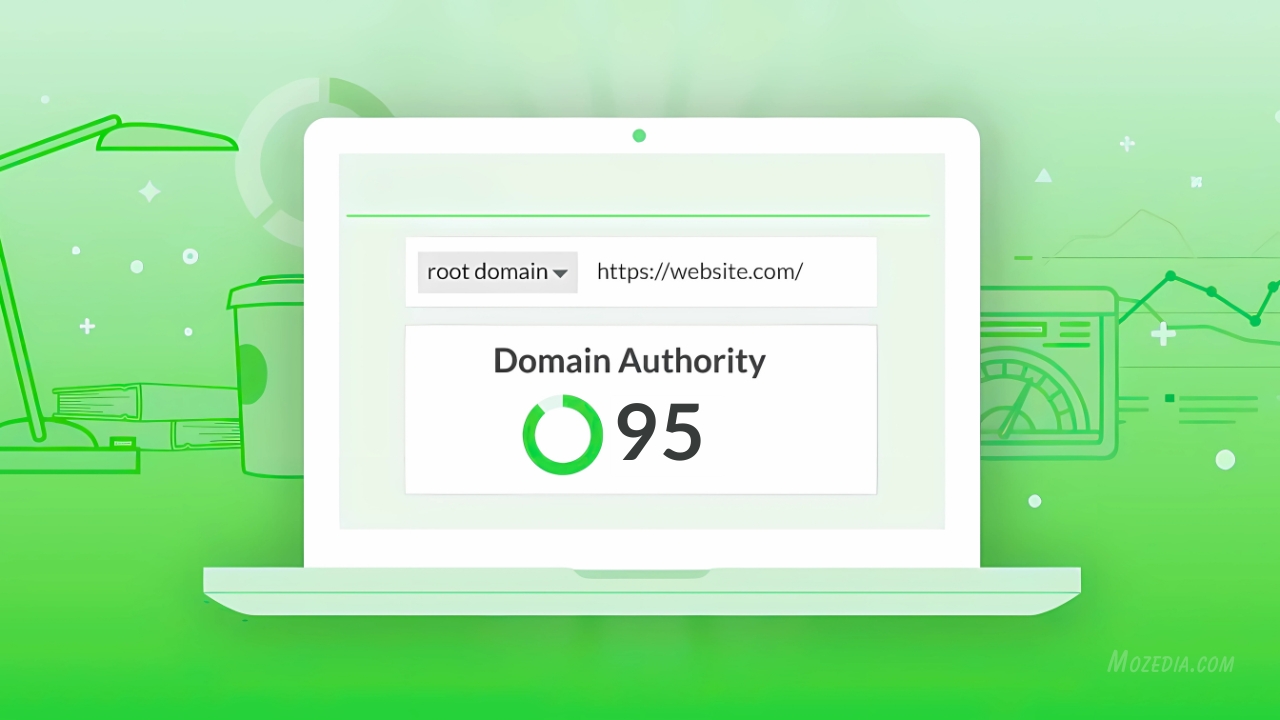
In 2026, with search algorithms becoming smarter and competition fiercer, increasing your website’s Domain Authority is more important than ever.
However, building authority for your domain is difficult but this comprehensive guide will guide you through proven strategies to effectively increase your DA.
In this guide, we’ll explore actionable steps to increase your website Domain Authority in 2026 effectively.
First of all, you must understand …
What is Website Domain Authority and How it Works?
Domain Authority (DA) is a search engine ranking score developed by Moz that estimates how likely a website is to rank on search engine results pages (SERPs) compared to other sites, ranging from 1 to 100, with higher scores indicating greater ranking potential.
Here’s a detailed explanation:
What is Domain Authority?
DA is a metric created by SEO tool company Moz to assess the overall strength of a website’s domain, not just individual pages.
How Domain Authority works?
DA is calculated based on a variety of factors, including the number and quality of backlinks a website receives, its domain age, and other SEO signals.
Why Domain Authority Important?
While DA isn’t a direct ranking factor used by Google, but a higher DA score indicates that a website is more likely to rank highly in search engine results for relevant keywords.
How Domain Authority Calculated?
Moz calculates domain authority using machine learning algorithms that evaluate a number of factors, primarily focusing on backlink data.
Where can I check my Domain Authority?
The easiest way to check domain authority of any website is moz domain authority checker tool called Moz’s Link Explorer. You can use it with a free Moz account.
Domain Authority (DA) vs. Page Authority (PA):
While DA assesses the overall strength of a domain, Page Authority (PA) measures the ranking potential of a specific page within a website.
How can I Improve Domain Authority?
You can improve your DA by focusing on building high-quality backlinks from authoritative websites, creating valuable content, and optimizing your website for search engines.
This article is all about increasing domain authority, so read it till the end and gain knowledge. Let me explain in details:
7 Proven Ways to Increase Your Domain Authority in 2026
The best way to increase moz domain authority is to improve your website’s overall SEO health, with a special focus on building high-quality backlinks from reputable sites.
However, you can take some actionable steps to increase your domain authority, such as creating valuable and shareable content, optimizing your website for search engines.
Here’s a more detailed breakdown of strategies:
1. Build High-Quality Backlinks
Backlinks remain the backbone of Domain Authority. In 2026, quality trumps quantity—focus on earning links from authoritative, relevant websites in your niche.
Aim to get backlinks from websites with high domain authority and relevance to your niche. Focus on these strategies:
1) Guest Posting
Write valuable guest articles for high-DA websites (DA 50+) in your industry. Include a link back to your site in the author bio or content where relevant.
2) Broken Link Building
Find broken links on reputable sites, then offer your content as a replacement.
3) Create Link-Worthy Content
Develop in-depth resources like guides, case studies, or infographics that naturally attract backlinks.
4) Skyscraper Technique
Improve existing high-ranking content and pitch it for backlinks.
5) Avoid Spammy Links
Use tools like Moz Link Explorer or Ahrefs to disavow toxic backlinks that could harm your DA.
Pro Tip: prioritize backlinks from sites with strong topical relevance, as search engines increasingly value context over generic authority.
2. Improve On-Page SEO
On-page SEO enhances your site’s relevance and usability, indirectly increasing DA by improving rankings and user signals, as well as Google’s algorithms prioritize content relevance and user experience.
1) Keyword Research
Use tools like Semrush, Ahrefs or Google Keyword Planner to target high-intent, low-competition keywords relevant to 2026 trends.
2) Content Depth
Long-form (2,000+ words) guides outperform thin content.
3) Title Tags and Meta Descriptions
Craft compelling, keyword-rich titles (under 60 characters) and meta descriptions (under 160 characters).
4) Meta Tags & Headings
Optimize title tags, H1, H2, and meta descriptions.
5) Use SEO-Friendly URLs
Short, descriptive, and keyword-rich URLs improve rankings.
6) Image Optimization
Use alt text, compressed images, and proper file names.
7) Internal Linking
Link to other high-value pages on your site to distribute “link juice”.
8) Schema Markup
Implement structured data to enhance search visibility.
3. Enhance Technical SEO
A technically sound website ensures search engines can crawl and index your pages efficiently, supporting DA growth.
1) Improve Site Speed
Use tools like Google PageSpeed Insights to optimize loading times—aim for under 2 seconds.
2) Mobile-First Optimization
With mobile-first indexing in full effect in 2026, ensure your site is responsive and user-friendly on all devices.
3) Fix Broken Links
Regularly audit your site with tools like Screaming Frog to eliminate 404 errors.
4) Secure Your Site
Maintain HTTPS encryption to build trust with users and search engines.
5) Fix Crawl Errors
Use Google Search Console to identify and resolve indexing issues.
6) Enhance Core Web Vitals
Improve Largest Contentful Paint (LCP), First Input Delay (FID), and Cumulative Layout Shift (CLS).
7) XML Sitemap & Robots.txt
Help search engines index pages efficiently.
4. Improve User Experience (UX)
Google’s Core Web Vitals and user behavior metrics (e.g., bounce rate, time on page) play a growing role in rankings—and, by extension, DA.
Google rewards sites with low bounce rates & high dwell time.
Improve your website’s user experience by making it easy to navigate, visually appealing, and engaging, follow these steps:
1) Intuitive Navigation
First, simplify menus and ensure users can find content in 3 clicks or fewer.
2) Use Breadcrumbs
Clear menus, breadcrumbs, and search functionality improve user experience.
3) Engaging Design
Use visuals, white space, and clear CTAs to enhance readability.
4) Reduce Bounce Rate
Add related articles, videos, or interactive elements to keep visitors on your site longer.
5) Readable Content
Short paragraphs, bullet points, and multimedia.
6) Fast-Loading Pages
Aim for < 2 seconds load time.
7) Reduce Pop-Ups & Ads
Excessive ads can frustrate users and increase bounce rates.
5. Create High-quality Linkable Content
Content is king—and in 2026, it’s more critical than ever. Search engines reward sites that consistently publish high-quality, user-focused content.
This is one of the most effective ways to earn high-quality backlinks, so create valuable content, linkable statistics or data pages.
1) Publish In-Depth Articles
Aim for articles over 1,500 words that cover topics comprehensively. Studies show longer content tends to earn more backlinks.
2) Evergreen Topics
Focus on timeless subjects (e.g., “How to Improve Website Speed”) while updating them with 2026-specific insights.
3) Case Studies & Original Research
Conduct surveys or studies to create unique data that others will cite and link to.
4) Use Multimedia
Add images, videos, infographics, and interactive elements to improve bounce rate and user experience.
5) Update Old Content
Regularly update old posts with new information, statistics, or trends to maintain relevance.
6) Optimize for User Intent
Create content that directly answers user queries.
7) Promote Your Content
Share your content on social media and other online channels to increase its visibility and reach.
8) Use AI Wisely
AI-generated content should be human-edited for quality.
6. Develop a Strong Internal Linking Strategy
Internal linking, strategically linking pages within your website, can significantly increase domain authority by distributing link equity, improving search engine visibility, and enhancing user experience.
Internal links serve as a way to deliver “link juice” or authority from one page to another within your domain.
1) Strengthening high-value pages
By linking low-authority pages to high-authority pages, you can help low-authority pages gain more credibility.
2) Strengthening authority
A well-structured internal linking strategy can help strengthen your website’s overall authority and SEO performance.
Use internal links correctly to guide users to relevant content and distribute link equity across your site, so that a clear and well-structured linking strategy can build crawlability and user engagement.
7. Remove toxic backlinks and low-quality content
Regularly audit your link profile to identify and disavow spammy or harmful links that could harm your site’s authority. Tools like Moz’s Link Explorer can help.
Secondly, thin or duplicate content can drag down your DA. In 2026, search engines will become stricter about content quality.
1) Content Audit
Use tools like Google Analytics or Screaming Frog to identify underperforming pages.
2) ink Audit
Regularly audit your website’s backlink profile to identify bad links and remove any low-quality or toxic backlinks.
Common Mistakes to Avoid in 2026
In 2026, the digital landscape is going to be more competitive than ever. Even small SEO and content management mistakes can lead to significant losses.
However, by staying updated, implementing the right strategies, and prioritizing user experience, your website can remain trustworthy and successful in the long run.
1) Ignoring Updates
Outdated and unupdated content signals to search engines that your site is no longer relevant.
2) Buying Links
Purchasing low-quality backlinks can result in penalties for your website and lower your Domain Authority (DA).
3) Ignoring Mobile Users
By 2026, most people will be using the internet on their mobile devices. If your site isn’t mobile-friendly, both trust and traffic will decrease.
4) Over-Optimization
Keyword stuffing or excessive linking damages your credibility.
How Long Does It Take to Increase Domain Authority?
Increasing Domain Authority (DA) is a lengthy process. New websites can take 6–12 months to see noticeable improvement.
Established websites, with consistent effort, can see results in 3–6 months.
The timeframe also depends on:
- How much competition there is in your niche
- Your website’s initial DA
- The consistency and quality of your work
Domain Authority Related (FAQs)
Increasing Domain Authority (DA) isn’t something that happens overnight. It requires consistent content updates, high-quality backlinks, and a strong website structure.
Below are some common questions with simple answers that will help you better understand the process of increasing your DA.
How long does it take to increase DA?
Approximately 3–6 months, if you consistently work on your SEO.
Does social media help increase DA?
Not directly, but going viral on social media increases traffic, and people may link to your site—which can then increase your DA.
Does DA affect Google rankings?
Not directly, as DA is not an official Google metric. However, most high-DA sites rank better because they have strong SEO.
What is considered a good DA score?
30–50 is considered decent, 50–70 is strong, and 70+ is considered excellent domain authority.
Conclusion
To increase your Domain Authority in 2026, you’ll need to work on several things simultaneously, such as building high-quality backlinks, optimizing your content, improving technical SEO, and enhancing the user experience.
By consistently implementing these strategies, you’ll build trust in your website, improve your rankings, and continuously increase your organic traffic.
Patience is crucial in the process of increasing your Domain Authority (DA).
Often, you won’t see immediate results, but as your website’s credibility, backlinks, and user experience strengthen, your DA will naturally rise.
So, instead of looking for shortcuts, focus on long-term strategies that’s where true success lies.
If you want to rank without backlinks, check out this post:
Start implementing these tactics today to boost your DA and dominate search rankings!



Very helpful tips! I’ll try the backlink strategies you shared. Thanks for this guide.
Welcome and Thanks Rahul.
Very helpful article! I was confused about how to improve my site’s domain authority, but now I understand it better. Thanks for sharing these tips.
Thank you so much, Priya! I’m really glad to hear it. Keep applying the tips consistently, you’ll definitely see improvements. Wishing you lots of success!
Awesome tips! The internal linking and topical authority strategy are game-changers. Thanks for sharing!
Glad you found it helpful, Jenna! 😊
I’ve been struggling to improve my site’s DA, but your tips on backlinks and internal linking gave me a solid direction. Great job!”
Thanks so much! Really glad the tips helped point you in the right direction.
Awesome tips! Building domain authority takes time, but consistency is key. Quality backlinks and great content really make a difference. Thanks for the valuable insights!
Great post! I appreciate it. I always like things to be clear, practical and engaging, you have an incredible ability to make thought-provoking ideas accessible.
Thanks Muskan.
Your post will be helpful for beginners to professionals. I got everything in one place, thanks, sir!
Welcome Imran, thanks